Vertical Racks are storage structures that use height to organize materials while keeping floors and access routes clearer. Their design varies. Some hold long items, such as pipes, lumber, or sheet panels, in upright positions. Others use shelves or adjustable supports to store boxes and equipment above floor level. The exact arrangement depends on the goods, available space, and how often workers need to retrieve them.
Most systems rely on a stable base, upright frames, and supports that hold items in place. Materials are loaded into designated sections, where their weight is distributed across the rack and transferred to the floor. In practice, safe and useful storage depends on more than the rack’s shape. Operators need to consider item dimensions, load limits, floor condition, access equipment, and the manufacturer’s installation instructions. That distinction matters. A rack suited to narrow panels may not work well for heavy cartons or irregular loads.
This guide explains what Vertical Racks are, how their main components work together, and where different designs can be useful. It also looks at practical selection and safety considerations, including clear labeling and regular checks for visible damage. Small details count. A support placed too high, or items stored unevenly, can make retrieval awkward and affect stability. No single rack design fits every space, so evaluating actual materials and daily workflows is a sensible place to begin.
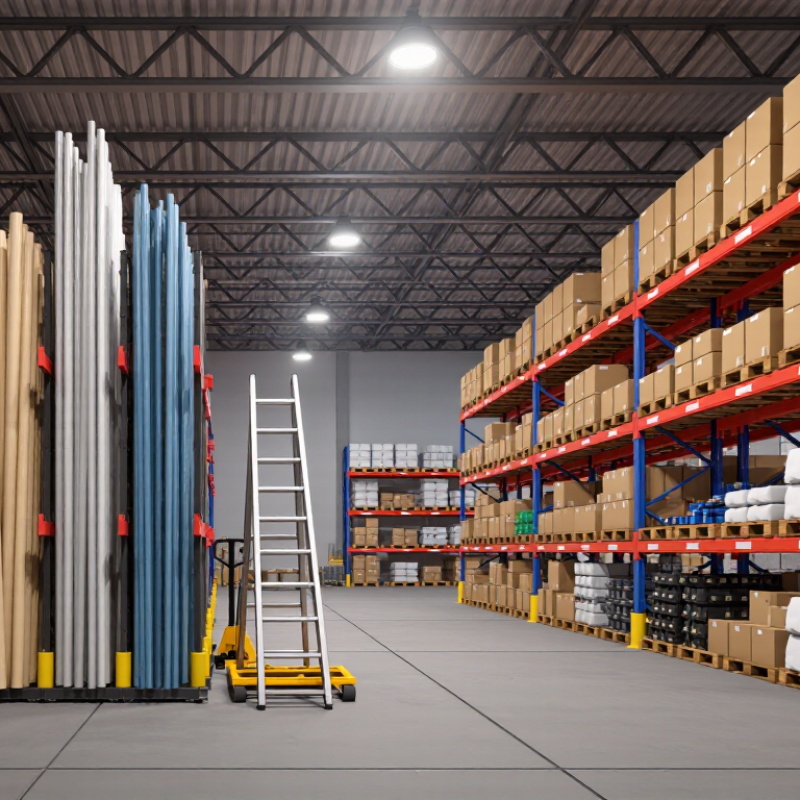
Vertical racks are storage systems that use upright frames to keep long or bulky items organized. Instead of spreading materials across a wide floor area, they hold them vertically or in dedicated horizontal supports. Their exact design depends on the items stored and how workers need to access them.
Warehouses may use vertical racks for lumber, pipes, metal bars, sheet materials, or long tools. Some models store sheets upright in individual slots; others support long stock on arms or rails. This can make sizes easier to identify and free up floor space. Space matters. A rack’s rated capacity, bay width, and storage method should match the load. Not everything fits. Odd shapes or frequently handled items may need a different setup.
Tips: Measure the longest and heaviest items before choosing a rack, and leave room for safe loading and retrieval. Check the rack’s capacity guidance, keep loads stable, and label storage locations clearly. Revisit the arrangement when inventory changes; a layout that worked last season may now slow people down.
Vertical racks store long or flat materials upright or at an angle. Compartments, dividers, and base supports keep loads separated and stable while allowing items to be selected individually.
| Material Stored | Typical Storage Position | How the Rack Holds It | Common Setting | Practical Handling Consideration |
|---|---|---|---|---|
| Lumber and timber boards | Upright, often leaning slightly against a support frame | Individual bays or dividers separate sizes and types; a base rail supports the lower ends. | Lumber yards, workshops, and building-material storage areas | Keep boards supported and grouped by length; secure the load to reduce the risk of pieces tipping or sliding. |
| Pipes, tubes, and conduit | Upright or angled, arranged in separate compartments | Side dividers and end stops limit movement and help keep bundles or individual lengths in place. | Maintenance areas, fabrication shops, and construction-material stores | Long or round items can roll or shift, so use suitable restraints and avoid overloading compartments. |
| Sheet goods, such as plywood or panels | Stored on edge, vertically or at a supported angle | Slotted bays, vertical dividers, or an A-frame support the sheets and keep different sizes separated. | Cabinetmaking shops, panel stores, and manufacturing facilities | Support sheets across their height and follow the rack design’s loading limits to help prevent bowing or falling. |
| Metal bars and structural sections | Upright in separated slots or bays | Heavy-duty dividers and a load-bearing base hold sections apart for identification and retrieval. | Metalworking shops and fabrication areas | Account for the weight and length of each load; use suitable lifting equipment when pieces are too heavy to handle safely by hand. |
| Mouldings, trim, and narrow profiles | Upright in narrow, labeled compartments | Multiple dividers organize different profiles and help prevent pieces from mixing or becoming damaged. | Finish-carpentry shops and building-supply storage areas | Use compartments sized for the material and avoid placing delicate pieces where they may be bent or crushed. |
Rack layout, capacity, and safe loading depend on the rack’s design, installation, and the material being stored. Follow the rack manufacturer’s instructions and applicable workplace safety requirements.
They can hold lumber, pipes, metal bars, doors, sheet panels, and long tools. Fit varies.
They store long items upright or in dedicated supports instead of spreading them across the floor. Space matters.
Measure the longest and widest items, then check bay dimensions and rated capacity. Leave room for loading.
They appear in warehouses, lumber yards, fabrication shops, and retail stockrooms. Each space has quirks.
Keep loads within their bays and distribute weight evenly. When the design allows, place heavier items lower.
Look for bent supports, loose anchors, damaged dividers, and sound floor support. Pause for a quick inspection.
Identify the item, clear the access path, and remove it without shifting nearby stock. No climbing.
Dividers can separate items, while padded contact points may protect fragile surfaces. Odd shapes still need attention.
Vertical Racks are storage systems designed to organize long, bulky, or space-consuming items upright, using floor space efficiently while keeping materials accessible. Depending on their design, they may store pipes, timber, sheet goods, rolls, or other elongated products. Their structure commonly includes a stable base, upright frames, supporting arms or shelves, and safety features that help keep loads secure. Different configurations suit different materials, load sizes, and access needs, from simple cantilever-style systems to enclosed or automated options.
Items are placed into designated storage positions, arranged to balance the load and allow safe access. Workers or lifting equipment retrieve them as needed, with the system’s layout helping reduce handling and improve organization. Vertical Racks are useful in warehouses, workshops, manufacturing areas, and retail backrooms where floor space is limited or materials vary in length. Choosing a system involves considering the items’ dimensions and weight, storage capacity, available space, loading method, access frequency, and workplace safety requirements.

 Guichang Metal Racks