Choosing the right Narrow Aisle Storage system in 2026 requires more than comparing rack heights or aisle widths. Warehouse operators now balance storage density, labor availability, order profiles, equipment costs, and operational safety. A few centimeters can create meaningful capacity gains. They can also create serious handling problems.
Dr. James A. Tompkins, a respected supply chain and warehouse design expert, said, “The warehouse is the heart of the supply chain.” That principle remains relevant as companies evaluate very narrow aisle racking, turret trucks, mobile racking, pallet shuttle systems, and automated storage technologies. Each option solves a different problem. A turret truck may increase pallet positions in a tall building. A mobile system can reduce wasted floor space. An automated solution may improve consistency, but it usually demands stronger data, maintenance planning, and capital commitment.
The best system depends on the building, inventory, and people using it daily. That sounds obvious. It is often overlooked. A 2026 comparison should examine aisle width, lift height, pallet dimensions, throughput, charging areas, floor quality, and emergency access. It should also consider future growth. A design that feels efficient today may become restrictive after product lines expand.
No ranking is perfect. Performance varies between facilities. Real-world testing matters. Site surveys matter more than attractive specifications. This guide reviews the leading Narrow Aisle Storage systems for 2026, focusing on practical capacity, flexibility, safety, automation readiness, and long-term value.
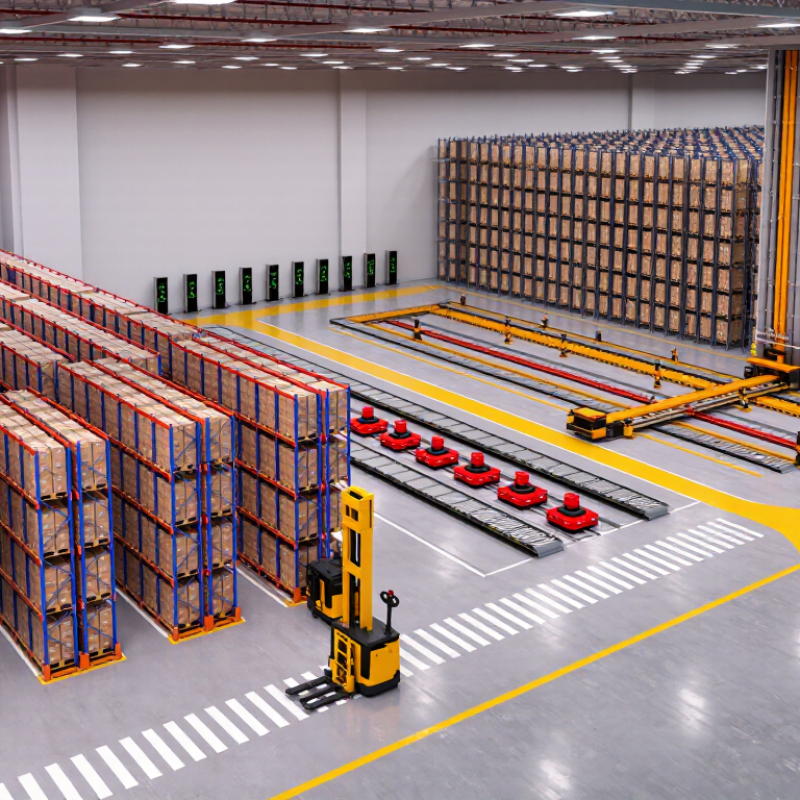
Narrow aisle storage systems are warehouse layouts that reduce travel space between pallet racks while maintaining controlled access to inventory. Aisle width depends on pallet dimensions, lift-truck turning radius, rack height, and operator visibility. The core principle is simple: store more cubic volume without making every pallet difficult to reach. It sounds efficient. It is not automatic.
Common systems in 2026 include very narrow aisle layouts, double-deep pallet storage, guided lift-truck systems, and high-density mobile racks. Very narrow aisle equipment travels along defined paths and can lift loads vertically, using warehouse height more effectively. Double-deep storage improves density but may reduce direct access to rear pallets. Mobile racks move storage rows, opening only the aisle required for picking. Each design changes the balance between capacity, speed, safety, and investment.
A reliable design begins with inventory data, not fashionable equipment. Fast-moving products need shorter travel routes and easier access. Slow-moving stock can tolerate deeper storage. Sensors, positioning controls, and warehouse software can reduce collision risks and location errors, but they cannot fix poor slotting. A practical review should measure pallet flow, retrieval time, visibility, and emergency access. No layout is perfect. Even a well-designed narrow aisle may create congestion during peak shifts. Teams should test a small zone, record delays, and revise the plan before expanding.
What Are the Top Narrow Aisle Storage Systems in 2026?
Narrow aisle systems are becoming more important as warehouse space grows expensive. The 2024 MHI Annual Industry Report found that 74% of supply chain leaders planned to increase technology and innovation investment within five years. That pressure makes storage density a measurable priority, not just a design preference.
Selective narrow aisle racking remains the most flexible option. It supports direct pallet access and works well with reach trucks. Double-deep racking stores more pallets behind each other, but it reduces immediate access. Very narrow aisle systems use turret trucks and guide rails to create dense, tall storage. They can exceed 12 metres in height when the building and equipment support it. Pallet flow systems suit fast-moving goods, using gravity rollers to move older stock forward.
The right choice depends on SKU count, turnover, pallet weight, and floor accuracy. A 2024 report from Interact Analysis identifies labor availability and automation demand as continuing warehouse pressures. Automated guided vehicles may reduce travel, but they require disciplined data and clear traffic rules. I would not select a system from aisle width alone. Measure turns, lift heights, battery charging space, and emergency access first. Small errors become expensive. Even experienced teams sometimes overestimate usable capacity after allowing for columns, sprinklers, and damaged pallets.
Typical operating aisle-width ranges by equipment type (metres). Actual requirements vary with load dimensions, rack layout, and equipment specifications.
Narrower operating aisles can increase storage density, but the right system depends on the handling task and site design. Treat these ranges as indicative planning values and confirm them with equipment and rack specifications.
In 2026, narrow aisle storage systems usually include very narrow aisle racks, mobile shelving, carton shuttles, and automated storage systems. Each option solves a different warehouse problem. Compare usable capacity, access speed, and automation before choosing equipment.
Start with capacity. Measure clear height, aisle width, pallet dimensions, and floor loading limits. A taller rack may add positions, but it can complicate maintenance and emergency access. Mobile shelving uses floor space efficiently, yet only one aisle may open at a time. That can slow picking during busy shifts. Measure the aisle.
Access affects labor more than many planning spreadsheets show. Review retrieval frequency, pallet weight, order profiles, and required travel distance. A system with excellent density may perform poorly when workers need constant access to mixed stock. In my own early estimates, I valued storage positions too highly and underestimated waiting time. Access matters.
Automation deserves a practical comparison. Shuttle systems can improve repetitive pallet movement, while automated cranes suit high-bay storage with predictable inventory flows. Sensors, barcode controls, obstacle detection, and backup procedures should be assessed alongside speed. Ask how operators handle faults, software downtime, and unusual loads. Technology is not automatically safer or cheaper. Test the workflow with real order data, including peak periods and damaged packaging. That trade-off remains.
In 2026, the strongest narrow aisle options include very narrow aisle racking, mobile aisle storage, and automated pallet systems. Each requires a different warehouse layout. Very narrow aisle racking can reduce aisle width to about 1.6 metres. It needs guided travel, stable floors, and turret trucks with precise positioning. Rack height must match fire protection, ceiling clearance, and load limits. Small measurement errors can create expensive bottlenecks.
Mobile aisle storage places racks on powered bases, reducing unused floor space. It needs reinforced flooring, safety scanners, and clear access zones. Daily operations may slow when several aisles require access at once.
Automated pallet systems need fixed pickup points, conveyors, sensors, and reliable inventory software. They suit repetitive pallet movements, but irregular loads can interrupt the workflow. Standard pallet sizes help. They do not solve every problem.
Tips: Measure turning paths with a loaded truck, not an empty one. Mark pedestrian crossings before installing racks. Test the slowest picking route during peak hours. Review battery charging space and emergency access early. A layout can look efficient on paper but fail beside a busy dock. Leave room for maintenance, future volume, and human mistakes. Test one aisle first when possible.
Narrow aisle storage is not a single solution. The right choice depends on pallet size, order patterns, lift height, and the space available for turning. A reach truck can suit operations with frequent pallet movements and moderate aisle widths. For very narrow aisles, guided turret trucks can access higher locations while keeping storage dense. Mobile racking may fit facilities where space is tight and access to every aisle is not needed at once.
Start with the work itself. A warehouse handling full pallets in long runs may benefit from high-density storage and fewer travel paths. An operation picking mixed cartons needs clear access and quick replenishment, even if that means giving up some storage density. Measure the widest load, not just the pallet. Check turning clearances, rack height, floor flatness, and the condition of the floor. Small differences matter.
Then test the layout with actual equipment and representative loads. Aisles that look efficient on a drawing can feel awkward during busy shifts. They really can. Track travel time, congestion, and replenishment delays before committing to a full installation. One limitation is easy to overlook: narrow aisles can reduce flexibility when product dimensions change. Leave room for that possibility, even if the current plan seems precise.
It reduces space between pallet racks while preserving controlled inventory access. More height, less travel.
Consider pallet size, lift-truck turning radius, rack height, and operator visibility. Measure the aisle carefully.
They suit warehouses needing vertical storage and defined travel paths. Equipment can lift pallets high, but visibility still matters.
It increases storage density but may hide rear pallets. Direct access becomes slower.
Storage rows move to open one required aisle. This saves floor space, but picking may slow during busy shifts.
Review pallet dimensions, inventory speed, order profiles, floor limits, and ceiling height. Fashionable equipment is not enough.
No. Sensors and software can reduce collisions and location errors, but poor slotting remains poor slotting.
Test one small zone first. Record retrieval delays, congestion, pallet flow, and emergency access before expanding.
No. A dense layout may frustrate workers handling mixed stock. I once valued storage positions too highly and missed waiting time.
Check software downtime, equipment faults, unusual loads, damaged packaging, and manual recovery steps. Speed alone proves little.
This article explains how Narrow Aisle Storage systems make better use of warehouse space by reducing the width needed between racks while preserving practical access to stored goods. It introduces common options for 2026, including very-narrow-aisle racking, double-deep storage, drive-in and push-back systems, and pallet-shuttle solutions. Each approach offers a different balance of storage density, selectivity, and equipment requirements.
Readers will learn how to compare capacity, access speed, and automation, then consider the layout factors that shape a suitable installation, such as aisle dimensions, rack configuration, floor conditions, and compatible handling equipment. The article also outlines how operating patterns, inventory variety, and order frequency can guide system selection. By matching these needs with the right storage method, warehouse teams can make informed decisions about space use, product accessibility, and day-to-day efficiency.

Guichang Metal Racks