How to Choose China Best Drive in Storage Rack Suppliers?

Time:2026-09-19 Author:Sienna
0%

Choosing a China-based Drive-in Storage supplier requires more than comparing prices and catalog photographs. The right decision begins with warehouse reality: pallet dimensions, load weights, forklift clearance, temperature, and daily movement patterns. Drive-in Storage supports high-density LIFO operations, but it may not suit every product or rotation schedule.

Professor René de Koster, a respected warehousing and material-handling researcher, has emphasized a practical principle: “A storage system must fit the product, the process, and the people using it.” This idea should guide supplier evaluation. A professional manufacturer should explain why its rack depth, rail design, upright profile, and entry layout match your operation.

Ask for engineering drawings.

Do not trust impressive photos alone. Review steel grades, welding details, surface treatment, load calculations, and documented quality inspections. Request project references with similar pallet loads and forklift types. A credible supplier should discuss tolerances, installation procedures, maintenance access, and local safety expectations without making vague promises.

Experience matters here. Small dimensional errors can cause pallet collisions, damaged rails, or difficult forklift movement. Supplier communication also reveals expertise. Can the team answer technical questions clearly? Can it revise drawings after receiving your warehouse measurements? These details matter.

No supplier is perfect. Even experienced buyers sometimes focus too heavily on the lowest quotation. That is a costly weakness. A cheaper rack may offer less steel, weaker support components, or limited after-sales assistance. Reliable selection combines verified engineering, transparent communication, realistic delivery commitments, and long-term service. The best China supplier is not simply the one offering the lowest price. It is the partner that can prove its system will perform safely, consistently, and economically.
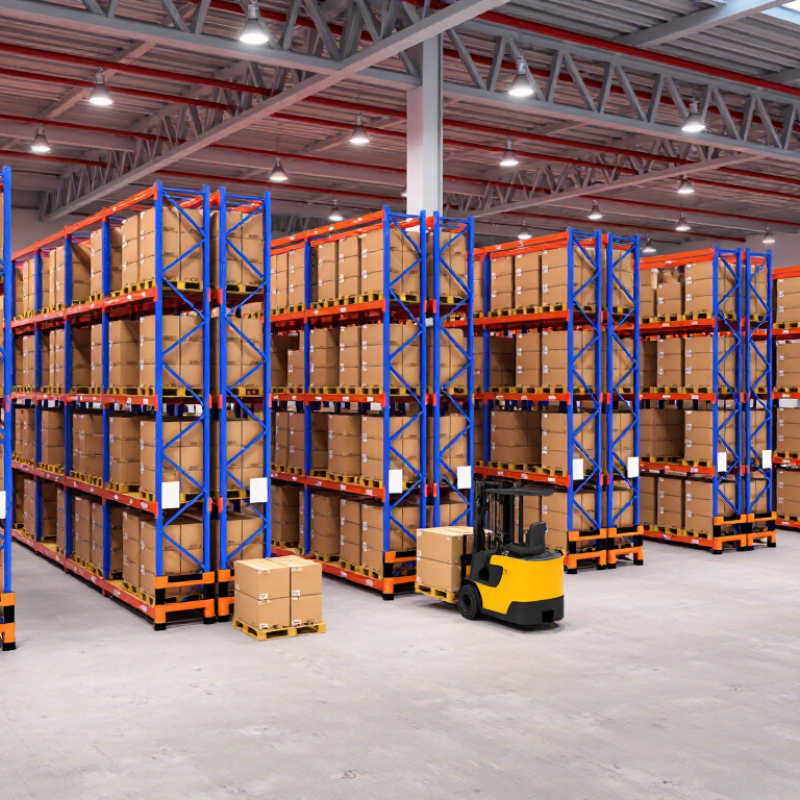
How to Choose China Best Drive in Storage Rack Suppliers?

Define Your Drive-In Storage Requirements

Define Your Drive-In Storage Requirements

Before comparing China-based drive-in rack suppliers, describe your operation precisely. Record pallet length, width, height, and loaded weight. Measure the available building height and floor area. Include columns, sprinklers, doors, and emergency routes. Measure the aisle.

Your inventory profile matters more than the rack price. Drive-in systems suit high-volume products with few stock-keeping units and regular pallet batches. They normally support last-in, first-out handling, while drive-through layouts can support first-in, first-out movement. State your required storage lanes, pallet positions, loading depth, and access frequency. A supplier should calculate upright loads, rail loads, bracing, forklift clearance, and floor capacity from these figures. Do not guess.

Forklift details need equal attention. Provide the truck model, turning radius, mast height, fork length, and operator visibility requirements. OSHA estimates that forklifts cause about 85 U.S. workplace fatalities and 34,900 serious injuries each year. This makes entry clearance and impact protection practical requirements, not decorative upgrades. Ask for load tables, engineering calculations, material grades, coating specifications, and installation tolerances. Request drawings that show every beam level and tunnel dimension.

Technology may also shape your specification. The MHI 2024 Annual Industry Report found that 55% of surveyed supply-chain professionals planned to increase technology investment. However, automation is not always the best answer. Consider barcode location control, pallet tracking, and inspection records before adding complex equipment. Require compliance with applicable local standards and an independent safety review. A perfect forecast is impossible. Recheck seasonal peaks, damaged pallets, and future SKU changes before approving the final design.

Verify Supplier Manufacturing and Product Capabilities

When choosing China’s best drive-in storage rack suppliers, verify the factory, not only the catalog. MHI’s 2024 Annual Industry Report found that 55% of supply-chain professionals face workforce shortages. This increases the value of stable equipment and documented production controls. Ask for the factory address, production photos, equipment list, and recent inspection records. A serious supplier should explain steel grades, welding procedures, coating thickness, and dimensional tolerances clearly. Vague answers deserve caution.

Product capability needs physical evidence. Request drawings showing upright profiles, guide rails, pallet positions, and maximum bay loads. Ask for load-test reports based on the proposed configuration, not a generic template. Check beam deflection, rail alignment, wheel-stop strength, and floor requirements. The Rack Manufacturers Institute’s design guidance emphasizes that rack capacity depends on the complete system, including connections and operating conditions. This matters greatly in drive-in layouts, where forklifts enter deep lanes and minor alignment errors can become costly.

Inspect one finished frame if possible. Look for clean welds, consistent powder coating, protected bolt holes, and readable identification plates. Factory audits are useful, but they are not perfect. I once trusted a polished sample and overlooked packaging weakness. The frames arrived scratched. Require a trial order, pre-shipment inspection, and photographs of packed components. Confirm whether the supplier can provide replacement parts, installation guidance, and traceable quality records. Capability is proven on the factory floor.

Compare Rack Design, Safety Standards, and Customization

How to Choose China Best Drive-in Storage Rack Suppliers?

When comparing China drive-in storage rack suppliers, examine the rack design before discussing price. A reliable supplier should explain upright thickness, rail spacing, entry height, and pallet compatibility. Drive-in systems need stable guide rails and reinforced frames because forklifts operate inside the structure. Ask for load calculations based on pallet weight, dimensions, and storage depth. A drawing is helpful. A vague drawing is not.

Safety standards deserve equal attention. Request material certificates, welding inspection records, surface-treatment details, and documented load testing. Check whether the supplier follows recognized international standards and can provide traceable inspection reports. Ask how the rack handles impact from forklifts. Also confirm installation tolerances and maintenance instructions. Some suppliers offer impressive specifications, but practical safety evidence may be limited. That gap matters.

Tips: Compare at least three technical proposals. Visit a production site if possible. Check steel thickness independently. Ask for references from similar cold-storage or warehouse projects. For customization, discuss aisle width, pallet size, ceiling height, temperature, and forklift turning space. A trustworthy supplier will identify design limits instead of accepting every request. I would also request a small prototype or sample connection. It costs time, but it can reveal poor fit, weak finishing, or unclear assembly instructions before full production. Mistakes happen. Good suppliers show how they correct them.

Evaluate Quality Control, Pricing, and Delivery Terms

Choosing China’s best drive-in storage rack supplier requires more than comparing catalog prices. Quality control should be visible and measurable. Ask for steel grades, welding standards, coating thickness, and load-test records. Inspect upright columns for straightness and clean weld seams. A reliable supplier should explain pallet weight, bay depth, forklift clearance, and seismic requirements clearly.

Pricing needs a wider view. A low quotation may exclude tooling, export packaging, inspection, spare parts, or inland transport. Request an itemized offer with currency, payment stages, warranty coverage, and replacement procedures. I once saw a cheaper project become expensive after damaged frames arrived. That experience changed my view. Price matters, but predictable cost matters more.

Tips: Request a sample connection before mass production. Compare material certificates with the delivered steel. Confirm whether installation drawings are included. Check delivery terms, production lead time, inspection dates, and the responsibility for damaged goods. Use clear Incoterms and written acceptance criteria. Allow extra time for port delays. Delivery promises are not always accurate. A small delay can stop warehouse operations, so keep a practical buffer.

Check Supplier Experience, Service, and Customer Feedback

Choosing a China drive-in storage rack supplier requires more than comparing prices. Experience appears in the details. Ask how many years the supplier has designed and installed drive-in systems. Request project photos, load calculations, and references from warehouses using similar pallets.

A capable supplier should explain column spacing, rail capacity, forklift clearance, and pallet dimensions clearly. Their engineers should review your warehouse layout before suggesting a rack configuration. Ask for drawings, material specifications, welding standards, surface treatment details, and inspection records. Service matters after production, too. Confirm response times, installation guidance, spare-part availability, and staff communication during delivery. Slow replies can become expensive delays.

Customer feedback needs careful checking. Read comments across several independent platforms, not only testimonials selected by the supplier. Contact one or two previous customers when possible. Ask whether the racks arrived on schedule and matched the approved drawings. Also ask how the supplier handled damaged parts or measurement changes. These answers reveal reliability.

I once treated a low quotation as proof of value. That was a mistake. A cheaper design may require more forklift maneuvering or future repairs. Suppliers should welcome difficult questions instead of avoiding them. Still, no supplier is perfect. Look for honest explanations, documented corrections, and practical after-sales support. A supplier that admits a past error may be more trustworthy than one claiming flawless performance.

How to Choose China Best Drive in Storage Rack Suppliers? - Check Supplier Experience, Service, and Customer Feedback

Evaluation Dimension What to Verify Reliable Evidence to Request Practical Selection Benchmark Suggested Weight
Manufacturing Experience Years of producing drive-in pallet racking and experience with high-density warehouse projects. Company registration history, production records, project references, factory audit reports, and dated installation photographs. Prefer suppliers with at least 5 years of relevant rack-manufacturing experience and documented projects completed within the last 24 months. 15%
Drive-In Rack Design Capability Ability to design entry lanes, rails, upright frames, pallet positions, operating clearances, and load distribution for the actual warehouse. General arrangement drawings, load calculations, engineering review records, pallet specifications, and forklift operating requirements. The design should be based on pallet dimensions, pallet weight, loading method, lane depth, forklift type, seismic conditions, and warehouse height. 15%
Load and Safety Compliance Structural safety, rated capacity, stability, impact protection, and safe operating requirements. Signed structural calculations, material certificates, weld inspection records, load-test documentation, safety instructions, and applicable standard references. Every load rating should be traceable to an engineering calculation and clearly displayed on approved rack signage. Do not accept capacity claims without supporting documentation. 18%
Material and Coating Quality Steel grade, thickness tolerance, welding quality, surface preparation, coating process, and corrosion resistance. Mill certificates, incoming-material inspection records, coating-process details, coating-thickness reports, and sample inspection results. Compare the approved material specification with the delivered product and require inspection records for critical load-bearing components. 10%
Factory Production Control Quality management, process consistency, equipment condition, traceability, and final inspection procedures. Valid quality-management certification, factory audit checklist, production process map, inspection plan, nonconformity records, and batch traceability documents. A qualified supplier should have documented incoming, in-process, welding, dimensional, coating, and final inspections. 10%
Customization and Project Fit Capability to adapt the system to warehouse height, aisle limitations, pallet type, temperature, humidity, and loading frequency. Customized drawings, bill of materials, engineering change records, sample layouts, and confirmation of all site constraints. The supplier should provide a project-specific proposal rather than relying only on standard catalog dimensions. 8%
Delivery and Installation Management Production lead time, packaging, shipment planning, installation supervision, and on-site handover. Detailed project schedule, packing list, quality release procedure, installation method statement, and previous delivery records. The contract should define production milestones, inspection points, delivery responsibilities, installation scope, and acceptance criteria. 8%
After-Sales Service Technical support, spare parts, warranty conditions, corrective-action process, and response time. Written warranty, service contact details, spare-parts list, maintenance instructions, escalation procedure, and sample service reports. Set a written first-response target of one business day for urgent issues and require a corrective-action plan for confirmed product defects. 8%
Customer Feedback Actual performance, delivery reliability, installation quality, communication, and long-term service. At least three recent customer references, independently verifiable contact details, completed-project photographs, and feedback covering similar rack applications. Give greater weight to references involving comparable pallet loads, lane depths, warehouse conditions, and operating methods. 5%
Commercial Transparency Quotation clarity, inclusions, exclusions, payment terms, inspection costs, shipping responsibilities, and change-order controls. Itemized quotation, approved bill of materials, Incoterms, packing details, inspection terms, warranty exclusions, and signed contract conditions. The lowest initial price should not be selected if it excludes engineering, safety components, installation, inspection, or required spare parts. 3%
Total Recommended Evaluation Weight 100%

Use the same evidence checklist for every supplier, verify certificates and references independently, and approve the final design only after confirming the warehouse conditions, pallet specifications, forklift requirements, and applicable local safety regulations.

FAQS

How can I verify a drive-in rack supplier’s factory?

Request the factory address, production photos, equipment list, and recent inspection records. Visit the site if possible. Catalogs can hide weaknesses.

What technical documents should a supplier provide?

Ask for steel grades, welding procedures, coating thickness, and dimensional tolerances. Request drawings for uprights, guide rails, pallet positions, and bay loads. Vague answers deserve caution.

Why are system-specific load tests important?

Rack capacity depends on the complete system and operating conditions. Request tests using your pallet weight, dimensions, storage depth, and layout. Generic reports may not fit your design.

What physical details should I inspect on a finished frame?

Check clean welds, even powder coating, protected bolt holes, and readable identification plates. Inspect rail alignment and wheel stops. Small defects matter.

How should I compare different technical proposals?

Compare at least three proposals before discussing price. Review upright thickness, rail spacing, entry height, aisle width, and pallet compatibility. The cheapest option may need more checking.

Which customization details affect drive-in rack design?

Discuss pallet size, load weight, ceiling height, temperature, aisle width, and forklift turning space. Include floor requirements and installation tolerances. Every warehouse behaves differently.

How can I reduce damage during delivery?

Request a trial order, pre-shipment inspection, and photos of packed components. Confirm protective packaging around corners and bolt holes. I once trusted a polished sample and missed weak packaging.

What support should a reliable supplier offer after production?

Confirm replacement parts, installation guidance, maintenance instructions, and traceable quality records. Ask for project references with similar storage conditions. Good suppliers explain design limits and correction steps.

Conclusion

Choosing the right China Drive-in Storage rack supplier begins with clearly defining your storage requirements, including pallet dimensions, load capacity, warehouse layout, access frequency, and available space. These details help suppliers recommend a suitable system rather than offering a standard solution that may not match your operation. You should also verify the supplier’s manufacturing capabilities, production equipment, technical expertise, and ability to provide stable, consistent output.

Next, compare rack design, structural safety, customization options, and compliance with relevant industry standards. Carefully evaluate material quality, welding and coating processes, inspection procedures, pricing transparency, payment conditions, lead times, packaging, and delivery terms. A reliable supplier should communicate clearly and provide practical technical support throughout the project. Finally, review the supplier’s experience with similar warehouse applications, installation guidance, after-sales service, warranty policy, and customer feedback. By assessing these factors together, you can select a dependable partner that offers safe, durable, and cost-effective Drive-in Storage solutions for long-term use.

Sienna

Sienna

Sienna is a skilled marketing professional with a deep expertise in our company’s core products and services. With a passion for innovation and detail, she plays a pivotal role in crafting insightful blog posts that not only highlight the unique features of our offerings but also provide valuable......