7 Best Carton Flow Storage Systems for Global Buyers?

Time:2026-10-19 Author:Sophia
0%

Choosing the right Carton Flow Storage system can reshape warehouse speed, accuracy, and labor costs. Global buyers often compare systems by price, but that approach can overlook daily operating realities. A rack that performs well in a quiet facility may struggle under constant replenishment, uneven cartons, or peak-season pressure. This guide examines seven practical solutions for different warehouse environments, product profiles, and budget levels.

The evaluation focuses on loading efficiency, carton movement, frame strength, maintenance access, and workplace safety. It also considers roller spacing, lane depth, guide rails, brake options, and compatibility with existing pallet racks. These details matter when cartons vary from small cosmetic packages to heavy spare parts. In real warehouse assessments, small alignment problems can create repeated jams and wasted walking time. Not every system fits every operation. That matters.

Global buyers should also verify material quality, supplier experience, installation support, replacement-part availability, and documented load ratings. Local building requirements and safety expectations may differ, so technical documents require careful review before purchase. A lower quotation can become expensive if rollers wear quickly or technicians cannot obtain parts. Reliable suppliers should explain limitations instead of promising universal performance. Some recommendations remain judgment-based, because warehouse layouts and carton behavior differ widely. Treat the rankings as a starting point, not a final specification. A measured trial with representative cartons usually reveals more than a polished brochure.
7 Best Carton Flow Storage Systems for Global Buyers?

Define Carton Flow Storage: FIFO, Gravity, and 30–50% Picking Gains

7 Best Carton Flow Storage Systems for Global Buyers?

Define Carton Flow Storage: FIFO, Gravity, and 30–50% Picking Gains

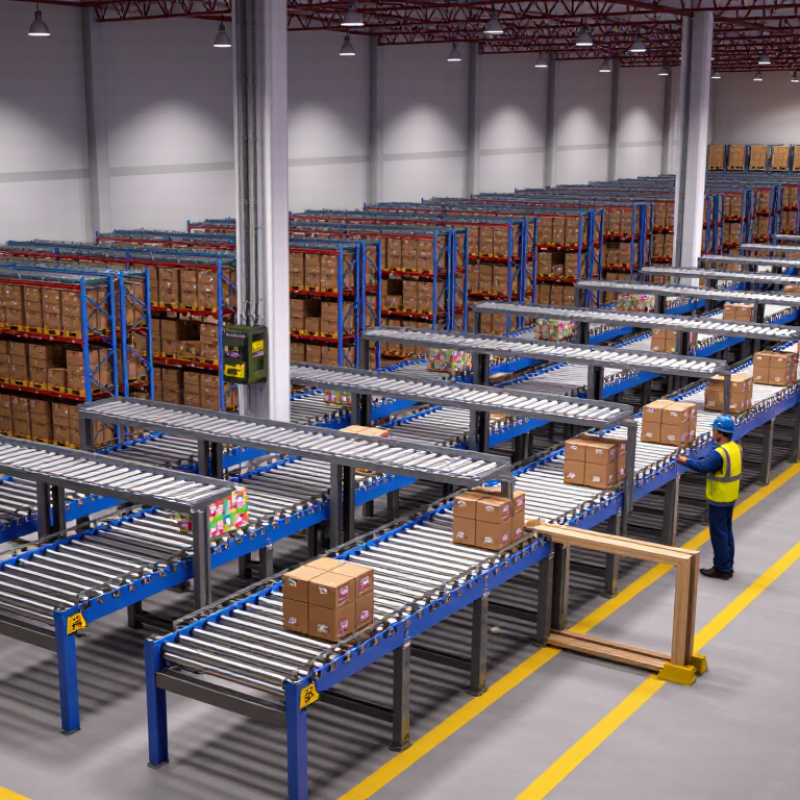
Carton flow storage uses inclined roller lanes to move cartons toward the picking face. Gravity does the work after staff load inventory from the rear. This layout supports first-in, first-out rotation when lanes are loaded correctly. It suits cartons, totes, and small packaged goods with steady demand.

A picker removes the front carton. The next carton then moves forward. Simple, but not foolproof. Proper lane depth, carton weight, and wheel spacing affect performance. In warehouse trials, organized carton flow areas can improve picking output by 30–50%. Actual results vary with travel distance, product mix, replenishment timing, and worker training. Measure baseline picks per hour before accepting any projected gain.

Global buyers should inspect load capacity, corrosion protection, lane adjustability, and spare-part availability. A practical test uses real cartons, not empty samples. Check whether soft packaging jams at the discharge point. Watch how fast heavier cartons accelerate. That detail matters.

Do not overfill lanes.

FIFO can fail when workers place new stock in front of older cartons. Clear loading instructions and visible lane labels reduce that risk. Buyers should also confirm local installation support, safety documentation, and future expansion space. I have seen efficient layouts lose value when replenishment aisles become too narrow. A smaller system with reliable access may outperform a larger one.

Classify Seven System Types by Load, Lane Depth, and SKU Velocity

Carton flow storage is not one universal solution. Global buyers should classify seven system types by load, lane depth, and SKU velocity.

Light-duty carton flow suits small cartons and hand picking.

Medium-duty case flow handles heavier cases with reinforced rollers.

Pallet flow supports full pallets and high replenishment density.

Deep-lane carton flow stores reserve cartons behind forward pick faces.

Mobile carton flow adds movable bases where floor space is expensive.

Pick modules combine multiple flow levels for fast order assembly.

Hybrid gravity systems mix carton, pallet, and shelving zones.

Load determines the frame, roller pitch, and brake requirements. Lane depth controls replenishment frequency and travel distance. SKU velocity decides whether a location needs one facing or several. Fast movers usually need short, accessible lanes. Slow movers can tolerate deeper storage. MHI’s 2024 Annual Industry Report found that 55% of supply-chain professionals planned to increase technology investment. That investment still needs disciplined slotting.

A practical design may reserve shallow lanes for top sellers, medium lanes for steady items, and deep lanes for seasonal stock. WERC’s distribution-center benchmarking work also emphasizes measuring productivity, accuracy, and space utilization together. A system can save floor space yet increase replenishment labor. That trade-off is easy to miss.

Lane depth should follow real order history, not optimistic forecasts. Test carton dimensions, load stability, and pick frequency for several weeks. Seven categories help comparison, but actual operations remain imperfect. Temperature, packaging changes, and damaged cartons can alter performance quickly.

Compare Capacity Using Throughput, Cube Utilization, and Pick Rate Data

7 Best Carton Flow Storage Systems for Global Buyers

Compare Capacity Using Throughput, Cube Utilization, and Pick Rate Data

The best carton flow system depends on measurable work, not catalog claims. Compare gravity carton flow racks, powered flow racks, mobile flow racks, carton live shelving, pick-to-light flow lanes, vertical flow modules, and shuttle-assisted flow systems. Each design handles product volume differently.

For a 40,000-unit warehouse, measure hourly throughput during the busiest shift. Gravity lanes often support steady manual picking with low energy use. Powered flow racks can raise throughput when replenishment and picking happen simultaneously. Pick-to-light flow lanes may improve pick rates for small, fast-moving items. Shuttle-assisted systems can use more vertical cube, but they require stronger controls and maintenance planning.

Cube Utilization and Pick Rate Cube utilization should include aisles, access zones, safety clearances, and replenishment space. A rack may appear dense while wasting capacity above cartons. Record usable carton positions, not total steel volume. Pick rate also needs context. A worker picking 120 lines per hour may slow near mixed-size cartons, poor labels, or congested transfer points. Real tests matter more than supplier projections.

Run a two-week pilot using actual cartons, labels, order profiles, and replenishment cycles. Track lines per hour, cartons handled, travel distance, replenishment delays, mispicks, and occupied cubic meters. Results can be imperfect. That is useful. One layout may achieve higher pick rates but create frequent replenishment work. Another may store more cartons while making operators walk farther. Global buyers should also test local service capability, spare parts access, operator training, and performance under seasonal peaks.

Evaluate Safety Against OSHA 1910.176 and ISO Material-Handling Standards

7 Best Carton Flow Storage Systems for Global Buyers

Carton flow storage can improve picking speed, but safety must guide the purchase. A practical shortlist includes single-deep lanes, multi-level pick modules, split-case racks, FIFO carton lanes, tote-flow racks, mobile flow units, and temperature-controlled flow sections. Each design needs suitable load ratings, stable frames, and controlled carton movement.

OSHA 1910.176 emphasizes secure storage, clear aisles, safe passageways, and stable stacking. A flow lane should prevent cartons from falling into walkways. End stops, back guards, lane dividers, and impact protection deserve close inspection. Keep emergency routes visible and unobstructed. Small details matter.

ISO material-handling principles support risk assessment, ergonomic access, and safer interaction between workers and equipment. Check the reach distance, replenishment height, roller condition, and carton weight. Operators should not twist while lifting. Heavy cartons belong in lower positions. Labels must remain readable after months of handling. Ask suppliers for load calculations, inspection guidance, and maintenance records. Also verify local requirements, because ISO standards provide guidance rather than one universal approval.

I would not treat a clean audit as proof of perfect safety. Real warehouses change. Cartons vary, rollers wear, and rushed workers improvise. Trial the system with actual packaging, then observe replenishment during a busy shift. That uncomfortable test often reveals more than a polished specification sheet.

7 Best Carton Flow Storage Systems for Global Buyers — Evaluate Safety Against OSHA 1910.176 and ISO Material-Handling Standards
Rank Carton Flow System Best Application Typical Design Data Operational Advantages Primary Safety Risks OSHA 1910.176 Evaluation Relevant ISO Design Considerations Global Buyer Suitability
1 Gravity Roller Carton Flow Rack High-volume piece picking, FIFO inventory rotation, and distribution centers handling medium-to-heavy cartons. Typical lane depth: 1.2–3.0 m Typical lane width: 300–1,200 mm Typical incline: 3°–8° Design load: project-specific Smooth carton presentation, strong FIFO control, good visibility, and relatively low operator travel. Roller pitch can be selected according to carton base quality and load distribution. Carton runaway, pinch points at lane exits, impact at stop devices, product overhang, and rack instability if anchoring or load limits are inadequate. Supports 1910.176(a) when aisles and operating clearances remain unobstructed; supports 1910.176(b) when cartons are stable and secured against sliding or collapse; supports 1910.176(c) when rack loads do not encroach on aisles. Apply risk assessment under ISO 12100; evaluate hand and body access using ISO 13857; address guarding and removable barriers under ISO 14120; consider manual lifting and pulling forces under ISO 11228. Excellent for standardized cartons and facilities requiring clear FIFO discipline. Verify local rack, seismic, fire, and anchoring requirements before purchase.
2 Skate-Wheel Carton Flow Rack Lightweight cartons, small-item picking, seasonal inventory, and operations requiring flexible lane adjustment. Typical lane depth: 0.9–2.4 m Typical incline: 3°–6° Low-to-medium carton loads Adjustable wheel spacing Lower rolling resistance for clean, flat carton bottoms; economical lane configuration; easy access for replenishment and order picking. Reduced stability for soft or damaged cartons, uneven movement caused by poor carton bases, finger pinch points, and increased sensitivity to debris. Meets the intent of safe storage under 1910.176(b) only when cartons remain stable during travel and at the pick face. Keep aisle clearance compliant with 1910.176(c) and prevent loose cartons from falling into walkways. Use ISO 12100 for hazard identification; assess access openings and pinch hazards using ISO 13857; evaluate repetitive handling under ISO 11228-3. Well suited to light-duty global applications. Not recommended for irregular, unstable, or heavily loaded cartons without a validated wheel and pitch design.
3 Inclined Roller Shelf Carton Flow Person-to-goods picking, retail replenishment, spare-parts storage, and low-to-medium throughput operations. Typical shelf depth: 450–900 mm Typical shelf width: 600–1,500 mm Typical incline: 4°–12° Front picking height: ergonomic design required Compact footprint, strong product visibility, easy SKU identification, and convenient front loading and picking. Excessive reach, shoulder elevation, falling cartons at the front edge, sharp divider edges, and overloading of individual shelf levels. Supports 1910.176(a) and 1910.176(c) when shelf projections do not reduce required clearance. Stable shelf lips, dividers, and load limits help address 1910.176(b). Apply ergonomic assessment using ISO 11228; use ISO 12100 for foreseeable misuse; evaluate accessible edges, openings, and fall hazards under ISO 13857. A strong choice where operator ergonomics and SKU visibility are priorities. Confirm shelf height ranges against local workforce and task requirements.
4 FIFO Carton Flow Rack with Lane Dividers Food and beverage distribution, pharmaceuticals, cosmetics, and other applications requiring strict stock rotation. Multiple dedicated lanes Lane dividers: adjustable Front and rear access First-in, first-out layout Clear lot separation, reduced picking errors, straightforward replenishment from the rear, and efficient use of vertical storage space. Incorrect lane loading, blocked rear replenishment aisles, divider displacement, carton collapse, and unsafe access to upper levels. Supports 1910.176(b) when loads are properly arranged, stable, and protected from displacement. Replenishment and picking aisles must remain clear under 1910.176(c); loading-dock interfaces should also be assessed under 1910.176(d) where applicable. Apply ISO 12100 risk assessment and ISO 13857 safety-distance principles. Use ISO 11228 to review repetitive replenishment, lifting, pushing, and pulling tasks. Particularly suitable for regulated or date-sensitive inventory. Requires disciplined loading procedures, lane labeling, and routine inspections.
5 Carton Flow Rack with Replenishment Deck High-throughput warehouses where replenishment cartons and picking cartons must be separated. Two-level or split-depth layout Dedicated replenishment access Medium-to-high storage density Stop and brake devices recommended Separates replenishment traffic from picking activity, reduces operator interference, improves lane availability, and supports continuous order fulfillment. Falls from upper levels, unsafe replenishment access, collision with material-handling equipment, excessive deck loads, and inadequate edge protection. Supports 1910.176(a) and 1910.176(c) only when working clearances, traffic routes, and equipment interfaces are controlled. Load stability and edge protection are central to 1910.176(b). Use ISO 12100 for the complete system; apply ISO 13857 to access and fall-exposure zones; evaluate manual handling forces under ISO 11228-1 and ISO 11228-2. Best for large distribution operations with defined replenishment procedures. Requires a documented traffic-management plan and operator training.
6 Pick-to-Light Carton Flow System E-commerce fulfillment, omnichannel distribution, and high-SKU operations requiring fast and accurate picking. Light modules at pick faces Single- or multi-order picking Low-to-medium carton weight Electrical controls required Reduces paper-based picking, provides visual quantity instructions, supports real-time replenishment signals, and can improve pick accuracy. Electrical faults, cable damage, distraction from illuminated indicators, congestion at pick faces, and unaddressed mechanical pinch points. The rack still must satisfy 1910.176(a)–(c) for clearance, safe storage, and aisle access. Electrical components and controls require separate electrical and machinery safety evaluation; the lighting system does not replace physical guarding. Apply ISO 12100 to mechanical and control-system hazards; use ISO 13857 for access distances; assess repetitive picking and workstation ergonomics under ISO 11228-3. Strong option for technology-enabled facilities. Confirm electrical standards, voltage compatibility, control integration, cybersecurity requirements, and maintenance access in each market.
7 Automated Carton-Flow Module with Conveyor or AS/RS Interface High-throughput fulfillment centers, goods-to-person picking, and operations integrating conveyors, shuttles, or automated storage equipment. Powered transfer interface Sensors and control logic High throughput potential Safety guarding required Reduces manual travel, enables continuous carton presentation, supports inventory tracking, and can increase throughput when correctly engineered. Unexpected startup, trapped-body zones, conveyor nip points, control-system failure, access during maintenance, and interaction with automated vehicles or lifting equipment. Apply 1910.176(a) and 1910.176(c) to aisles, clearances, and traffic routes. Safe storage under 1910.176(b) still applies to cartons and containers. Lockout/tagout and machine safeguarding requirements must also be addressed where applicable. Use ISO 12100 for machinery risk assessment; apply ISO 13857 for safety distances; use ISO 14120 for guards; consider ISO 13849-1 or applicable functional-safety methods for safety-related control systems. For automated industrial trucks, evaluate the relevant ISO 3691 requirements. Best for large-scale automation projects with qualified integrators. Requires formal validation, safeguarding verification, emergency-stop testing, maintenance procedures, and operator training.
Important evaluation note: The dimensions, angles, and load descriptions above are representative design ranges rather than universal product specifications. Actual capacity depends on frame configuration, beam spacing, roller or wheel selection, carton dimensions, center of gravity, seismic conditions, anchoring, and local building codes.
OSHA 29 CFR 1910.176 and ISO standards provide requirements or design principles; they do not automatically certify a carton flow system. Buyers should require a site-specific risk assessment, structural calculations, load signage, aisle-clearance verification, guarding review, inspection procedures, and documented installation and operator training before commissioning.

Rank Global Suppliers by TCO, Lead Time, Certifications, and Service Coverage

7 Best Carton Flow Storage Systems for Global Buyers?

Global buyers should rank carton flow suppliers by total cost of ownership, not purchase price alone. A practical ranking includes equipment, freight, installation, maintenance, spare parts, and future expansion. The strongest suppliers offer stable roller performance, adjustable lanes, and documented load testing. Lead time matters when a warehouse opening date is fixed. A low-cost system is not attractive if production delays continue for six weeks.

Certifications add confidence, but buyers must verify their scope and validity. Useful documentation may include material traceability, structural testing, workplace safety compliance, and quality management certification. Service coverage also separates the top seven suppliers. Regional technicians, multilingual support, stocked replacement parts, and clear warranty terms reduce operational risk. In my experience, response time often matters more than a polished sales presentation. Still, service claims should be tested with references and written service-level commitments.

Tips: Build a weighted scorecard before requesting quotations. Give TCO 35%, lead time 25%, certifications 20%, and service coverage 20%. Ask each supplier to price the same lane count, carton size, loading method, and delivery location. Check whether installation training is included. Do not ignore currency changes or import charges. These details can distort the ranking. A weakness remains: projected maintenance costs are rarely precise, so buyers should use conservative estimates and review the ranking after twelve months.

FAQS

What are the main types of carton flow storage systems?

Common types include light-duty carton flow, medium-duty case flow, pallet flow, and deep-lane carton flow. Other options include mobile flow units, multi-level pick modules, and hybrid gravity systems. Each design serves different loads and picking patterns.

How should load weight influence the system choice?

Load weight determines the frame strength, roller spacing, and braking requirements. Small cartons may use lighter lanes. Heavier cases need reinforced rollers and stronger supports. Full pallets require pallet-flow equipment with suitable load ratings. Weight errors can become expensive.

How does lane depth affect warehouse performance?

Shallow lanes reduce travel distance and support frequent replenishment. Deep lanes hold more reserve cartons but may require extra labor. Fast-moving items usually need short, accessible lanes. Seasonal or slow-moving stock can use deeper lanes. Deeper is not always better.

How should SKU velocity guide storage locations?

Place high-velocity SKUs near accessible picking positions. Give top sellers one or more forward facings. Use medium lanes for steady products. Reserve deep lanes for slower or seasonal items. Base decisions on real order history, not hopeful forecasts.

What safety features should carton flow systems include?

Inspect end stops, back guards, lane dividers, and impact protection. Cartons should not fall into walkways. Keep aisles, emergency routes, and passageways clear. Labels must remain readable during daily handling. Small details matter.

What should buyers check before purchasing a system?

Request load calculations, inspection guidance, and maintenance records. Measure carton dimensions, weight, stability, and pick frequency. Check roller condition and replenishment height. Heavy cartons belong in lower positions. Ask about local safety requirements. Documents alone are insufficient.

Can carton flow storage reduce space but increase labor?

Yes. Deeper lanes may save floor space while increasing replenishment work. Longer travel paths can reduce the original productivity benefit. Compare picking speed, accuracy, labor time, and space use together. A compact layout may still perform poorly.

How should a new system be tested?

Test the system with actual cartons for several weeks. Observe replenishment during a busy shift. Check movement, carton stability, reach distance, and worker posture. Repeat tests after packaging changes. Real operations are messy. A polished specification can miss practical problems.

Conclusion

Carton Flow Storage is a gravity-based warehouse solution designed to improve picking speed, stock rotation, and space utilization. By using inclined roller lanes or wheels, cartons move automatically toward the picking face, supporting first-in, first-out (FIFO) inventory control and potentially increasing picking productivity by 30–50%. The best system depends on carton weight, lane depth, SKU velocity, replenishment frequency, and available floor or vertical space.

This guide compares seven Carton Flow Storage system types, from compact single-lane designs to high-density, multi-level configurations. Each option is evaluated through throughput, cube utilization, pick rate, load capacity, and operational flexibility. It also reviews safety considerations aligned with OSHA 1910.176 and relevant ISO material-handling principles, including stable loading, clear access, and proper maintenance. For global buyers, supplier selection should focus on total cost of ownership, manufacturing lead time, certifications, installation support, spare-parts availability, and service coverage across operating regions.

Sophia

Sophia

Sophia is a dedicated marketing professional with an exceptional depth of knowledge about her company's products and services. With a keen understanding of market trends and customer needs, she crafts insightful blog posts that not only inform but also engage readers, enriching the company’s online......