What Are the 2026 Top Types of Steel Platforms?

Time:2026-10-14 Author:Isabella
0%

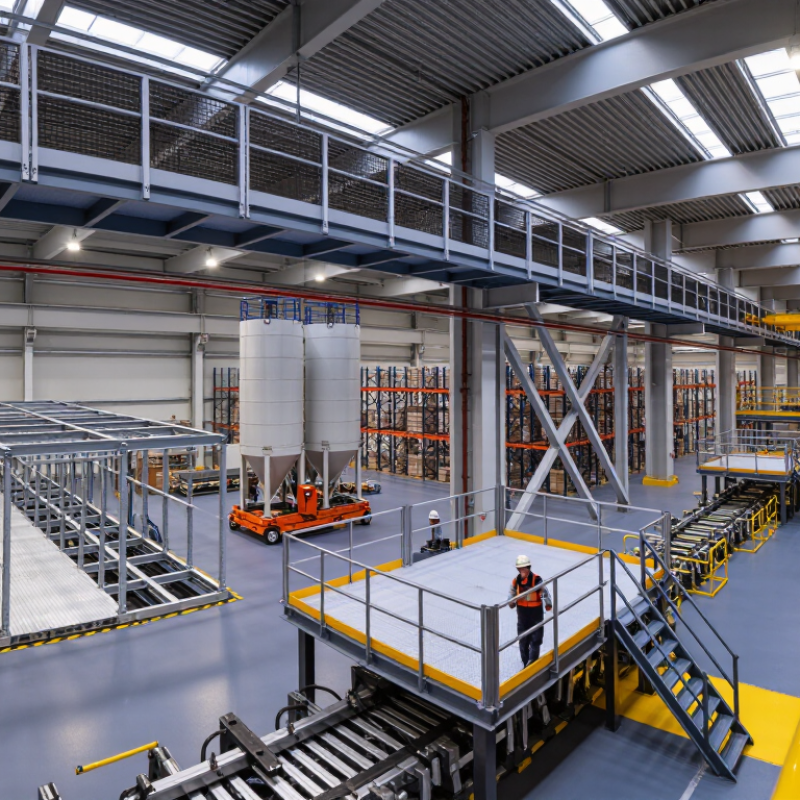
In 2026, Steel Platforms remain essential across factories, warehouses, ports, and energy facilities. Their designs continue to evolve with safer access, lighter structures, and smarter maintenance planning. A platform may support a technician above a production line or carry equipment beside a storage tank. Each setting creates different structural demands.

This guide examines the leading types of Steel Platforms expected to shape industrial projects in 2026. It considers fixed platforms, modular systems, mobile platforms, mezzanines, catwalks, and specialized maintenance decks. The comparison focuses on load capacity, corrosion resistance, installation speed, worker access, and long-term value. Practical details matter. A grated walkway can improve drainage, while a coated steel deck may suit a dry indoor facility better.

Safety remains the central measure.

Reliable platform selection requires more than comparing prices or appearance. Engineers should verify live loads, vibration, guardrail height, anchoring, fire exposure, and local building requirements. Manufacturers’ test data and documented quality procedures also deserve careful review. However, no single platform type is ideal for every application. That assumption can cause expensive redesigns.

Some emerging systems promise faster installation and reduced material use. Their real performance still requires careful field evaluation. Weather, maintenance habits, and unusual equipment loads may change the final decision. This article therefore presents the strongest options while acknowledging practical limitations. Readers can use the overview to compare solutions, question marketing claims, and identify when professional structural advice is necessary.
What Are the 2026 Top Types of Steel Platforms?

Steel Platform Basics and Their Role in Industrial Infrastructure

What Are the 2026 Top Types of Steel Platforms?

Steel platforms are practical layers within industrial infrastructure. They support workers, machinery, pipes, cables, and inspection routes. Common 2026 designs include mezzanine platforms, equipment platforms, pipe-rack platforms, and maintenance access platforms. Each type solves a different height, load, or safety problem.

The World Steel Association reported about 1.89 billion tonnes of crude steel production in 2023. This scale supports continued steel use in factories, warehouses, energy facilities, and transport infrastructure. Steel remains valuable because it offers high strength, predictable fabrication, and easier modification than many permanent materials. ISO 14122 also provides guidance for permanent access systems, including platforms, stairs, and guardrails. However, steel is not automatically the best answer. Corrosion, vibration, drainage, and fire exposure can change the design quickly. Designers sometimes overbuild platforms, then discover restricted maintenance access.

Tips: Define loads before choosing a platform type. Include workers, tools, stored materials, impact, and equipment vibration. Check clearances around valves and moving parts. A narrow platform may save steel but increase inspection time. That trade-off deserves review.

The 2024 Global Infrastructure Outlook identifies growing infrastructure demand across industrial and urban systems.

This pressure favors modular steel platforms that can be fabricated off-site and installed with less disruption. Bolted connections can support future changes, but they need careful inspection and torque control. Welded designs may provide stiffness, yet repairs become less convenient. Field experience shows that the cheapest layout is rarely the easiest to operate. Poor drainage is a small detail, until rust appears beneath a grating panel.

Main Structural Types of Steel Platforms in 2026

What Are the 2026 Top Types of Steel Platforms?

Main Structural Types of Steel Platforms in 2026

Steel platforms in 2026 are shaped by load demands, access needs, and installation conditions. Fixed elevated platforms remain common around tanks, machinery, and processing lines. Their columns transfer vertical loads into concrete foundations. Bracing controls sway, especially where workers move near vibrating equipment. In site inspections, I often find that poorly planned access creates more trouble than weak steel.

Modular bolted platforms offer faster installation and easier future changes. Sections can be adjusted around pipes, ducts, and maintenance zones. Mezzanine platforms add working or storage levels inside industrial buildings. They need careful checks for floor loading, headroom, fire separation, and forklift movement. Grated decks improve drainage, while solid decks protect areas below from falling tools.

Cantilever platforms extend from walls or primary frames where ground supports are unavailable. They save floor space but create higher connection forces. Truss-supported platforms suit wider spans and reduce the number of columns. Their deeper frames may interfere with overhead services. Access matters. Stair angles, handrail height, toe boards, and clear walking widths should be reviewed with actual users.

A neat drawing can still miss a maintenance worker’s reach. Corrosion allowance, drainage, weld quality, and inspection access deserve equal attention. Temporary construction loads are also easy to overlook. I would not select a platform type from appearance alone. Soil conditions, vibration, emergency access, and local structural requirements can change the safest choice. Even experienced teams sometimes revise the design after a walk-through.

What Are the 2026 Top Types of Steel Platforms?

Main Structural Types of Steel Platforms in 2026

Chart focus: Representative clear-span capability of common steel platform structural systems.

Beam-and-column platforms are widely used for industrial floors and mezzanines. Truss-supported and space-frame platforms provide longer spans with fewer intermediate supports, while cantilever platforms are suitable where ground columns are restricted. Modular platforms are commonly selected for fast installation and repeatable layouts.

The values are indicative engineering ranges represented by typical clear-span values, not market-share data. Final dimensions depend on loading, vibration, deflection limits, connection design, corrosion conditions, and applicable standards such as ASCE 7 and EN 1993.

Steel Platforms Classified by Use and Installation Environment

What Are the 2026 Top Types of Steel Platforms?

Steel platforms in 2026 are increasingly classified by use and installation environment. Fixed access platforms support inspections, valve operation, and routine maintenance inside factories. Mezzanine platforms add elevated storage or production space without expanding the building footprint. Loading platforms serve warehouses and logistics yards, where forklifts, pallets, and dock traffic demand strong impact resistance.

Outdoor conditions create different priorities. Rooftop service platforms need lightweight framing, guarded edges, and weather-resistant finishes. Offshore and coastal platforms require corrosion control because salt spray attacks joints, bolts, and walking surfaces.

Modular platforms suit construction sites and temporary plant upgrades. They install quickly, but repeated assembly can weaken connections if inspections are rushed. That detail is easy to underestimate.

The World Steel Association reported approximately 1.88 billion tonnes of crude steel production in 2024, showing the material’s continuing industrial importance. The International Energy Agency’s Global Energy Review 2025 also recorded continued growth in electricity demand, supporting more maintenance access around power and process facilities. OSHA walking-working surface rules emphasize guardrails, safe access, and structural integrity. These requirements should shape platform selection, not follow it.

In practice, the “top” type depends on the environment. A galvanized steel platform may suit a dry warehouse, while a coated or stainless design may be wiser near chemicals.

Engineers should verify load capacity, drainage, vibration, access clearance, and emergency routes. A visually clean platform is not automatically a safe one. Mistakes happen when drawings ignore real worker movement.

Key Design, Safety, and Material Selection Factors

In 2026, the most practical steel platform types will include mezzanine decks, maintenance platforms, access platforms, and modular work platforms. Each serves a different movement pattern. Mezzanines expand usable floor space above production areas. Maintenance platforms place technicians beside valves, conveyors, and elevated equipment. Access platforms prioritize stairs, ladders, handrails, and controlled entry. Modular systems can adapt when machinery layouts change, but joints require careful inspection.

Design should begin with real loads, not visual appearance. Engineers should calculate workers, tools, stored materials, impact forces, vibration, and uneven loading. AISC guidance supports transparent load paths, stable connections, and documented steel member selection. OSHA 1910.23 requires guardrails with a 42-inch top rail, plus a 200-pound top-rail strength criterion. Small details matter. A 10-millimeter gap can still catch a tool or heel. BLS reported 1,075 construction fatalities in 2023, reinforcing why access routes and edge protection deserve early design attention.

Material selection depends on exposure and maintenance access. Carbon steel often suits dry indoor platforms, while galvanized or coated steel performs better in humid, corrosive areas. Stainless steel may be justified near aggressive chemicals, but its higher cost needs evidence. The World Steel Association reported about 1.88 billion tonnes of crude steel production in 2024, showing the material’s global scale, not automatic suitability. Engineers should verify grade, weld quality, slip resistance, fire conditions, and corrosion allowance. A rushed specification can look efficient. It may age badly.

What Are the 2026 Top Types of Steel Platforms? - Key Design, Safety, and Material Selection Factors

Comparison of common steel platform configurations and the principal factors used for selection and design

Platform Type Typical Applications Primary Structural Form Typical Design Load Range* Recommended Material and Finish Key Safety and Design Factors Best Selection Scenario
Fixed Access Platform Routine access to machinery, tanks, valves, inspection points, and maintenance areas Steel deck supported by beams, columns, brackets, or connected frames Approximately 2.0–5.0 kPa uniformly distributed load, subject to the governing code and use Carbon structural steel with hot-dip galvanizing or a suitable protective coating system Guardrails, midrails, toe boards, safe access width, slip resistance, deflection control, corrosion allowance, and verified anchorage Permanent industrial access where frequent personnel movement is expected
Mezzanine Platform Additional production, storage, maintenance, or office-level floor space inside a building Steel columns, primary beams, secondary joists, and metal deck or composite floor system Often about 3.0–7.5 kPa for general occupancy; storage areas may require substantially higher loads Structural carbon steel; galvanized or painted members; deck selected for fire, vibration, and wear requirements Column base design, floor vibration, stair and guardrail geometry, fire protection, rack impact, egress, and slab capacity Projects needing extra usable floor area without expanding the building footprint
Catwalk Platform Long, narrow routes above equipment, conveyors, pipe racks, and process lines Long-span beams or trusses with grating panels and regularly spaced supports Commonly designed around 2.0–5.0 kPa plus concentrated maintenance loads and environmental actions Open steel grating or serrated bar grating; galvanized steel is common in exposed locations Travel width, handrails, toe boards, grating span, vibration, falling-object control, wind effects, and emergency egress Linear access is more important than large working or storage areas
Equipment Service Platform Inspection, lubrication, repair, and component replacement around pumps, motors, compressors, and process equipment Compact framed deck with local brackets, supports, stairs, or ladders Typically 2.5–5.0 kPa plus point loads from tools, removable parts, and maintenance personnel Carbon steel with galvanized or coated surfaces; stainless steel may be selected for aggressive environments Clearance from moving parts, isolation from vibration, access for lifting components, guarding, drainage, and anti-slip flooring Safe maintenance access is required around a specific piece of equipment
Loading and Dock Platform Material transfer, pallet handling, vehicle loading, and warehouse or logistics operations Heavy-duty frame with deck plate, grating, edge protection, and sometimes a hinged or adjustable section Often 5.0–12.0 kPa or higher, with forklift wheel loads and impact loads checked separately Heavy structural steel with wear-resistant deck plate or reinforced grating; corrosion protection matched to exposure Forklift wheel loads, vehicle impact, dock edges, wheel stops, guardrails, level changes, drainage, and local reinforcement The platform will carry mobile equipment, pallets, or high-frequency material handling
Temporary or Modular Platform Construction, shutdowns, temporary inspection, event infrastructure, and changing work areas Bolted or pin-connected frames, adjustable legs, modular panels, and removable guardrail sections Commonly 2.0–5.0 kPa, but the actual rating must reflect assembly, support, and site conditions Reusable galvanized or painted structural steel; components should be inspected before each deployment Stability against sliding and overturning, connection locking, uneven ground, wind, assembly sequence, inspection, and load signage Fast installation, relocation, and future reconfiguration are more important than permanent integration
Elevated Outdoor Platform Outdoor equipment access, elevated observation, utility infrastructure, and process facilities Braced steel frame, columns, beams, deck grating, stairs, and foundation connections Usually 2.0–5.0 kPa plus wind, snow, seismic, thermal, and maintenance loads as applicable Hot-dip galvanized steel, duplex coating systems, or weathering steel where the environment and detailing are suitable Wind overturning, lateral drift, foundation uplift, drainage, ice formation, corrosion at connections, and lightning or bonding requirements The platform is permanently exposed to weather and environmental deterioration
Cantilever Platform Access over obstacles, building edges, tanks, conveyors, or areas where floor supports cannot be installed Cantilever beams, brackets, moment connections, or trussed projections fixed to a primary structure Typically 2.0–5.0 kPa, with special attention to concentrated loads and torsional effects High-strength structural steel may reduce member size; finish depends on indoor, outdoor, and chemical exposure Connection strength, support-structure capacity, deflection, vibration, torsion, fall protection, and construction-stage stability Obstructions or operational requirements prevent the use of conventional columns or legs

Material-selection checklist: Confirm the required yield strength, corrosion category, coating durability, fire performance, weldability, fabrication tolerances, connection type, and compatibility with the operating environment before finalizing the steel grade.

Important note: The load ranges are indicative planning values rather than universal design limits. Final design should be verified by a qualified engineer using the applicable local building, occupational-safety, structural-steel, fire, seismic, wind, and access standards.

Emerging Technologies Shaping Steel Platforms in 2026

What Are the 2026 Top Types of Steel Platforms?

In 2026, steel platforms are becoming smarter, lighter, and easier to reconfigure. Modular work platforms use bolted sections, adjustable legs, and replaceable deck panels. Elevated maintenance platforms increasingly combine high-strength steel with prefabricated stairways. Offshore and industrial platforms are also adopting corrosion-resistant coatings, enclosed cable routes, and safer access systems.

Emerging technologies are changing platform design more deeply. Digital twins can connect structural models with live sensor readings. Sensors monitor vibration, load changes, corrosion, and unusual movement. The International Energy Agency reports that steel production remains responsible for about 8% of global energy-related emissions. This pressure is encouraging lower-carbon steel, electric production, recycled feedstock, and more efficient fabrication. The World Steel Association recorded approximately 1.88 billion tonnes of crude steel production in 2024, showing the enormous scale of this transition.

Robotic welding and automated cutting can improve repeatability on modular platform components. Additive manufacturing may support small replacement parts, although large structural applications still require careful verification.

That limitation matters. A digital dashboard cannot replace qualified inspection in harsh environments. Research from the International Federation of Robotics also shows continued growth in industrial automation, but workforce training remains uneven.

In practice, the strongest 2026 platforms will combine sensors, durable materials, clear load records, and experienced human judgment. Technology helps. It does not remove every design risk.

FAQS

What are the main types of steel platforms?

Common types include mezzanine, equipment, pipe-support, maintenance, access, and modular work platforms. Each serves a different operational need.

What does a mezzanine platform provide?

A mezzanine adds usable floor space above a production or storage area. It can hold workers, tools, or light equipment.

What should engineers calculate before selecting a platform?

They should calculate worker loads, tools, stored materials, impact, vibration, and uneven loading. Appearance should not drive the decision.

Why are maintenance platforms important?

Maintenance platforms place technicians beside elevated equipment, valves, and conveyors. Proper clearance reduces awkward reaching and inspection delays.

Which safety details deserve careful attention?

Guardrails, stairs, ladders, handrails, gaps, and stable connections require early review. A small gap can catch a heel or hand tool.

How should steel material match the environment?

Carbon steel may suit dry interiors. Galvanized or coated steel better resists humidity and corrosion.

When might stainless steel be considered?

Stainless steel may suit areas exposed to aggressive chemicals. Its higher cost should have a clear technical reason.

Are bolted platforms better than welded platforms?

Bolted connections can simplify future changes and replacement. Welded designs may provide stiffness but complicate field repairs.

What design mistake appears frequently?

Designers may overbuild the structure while restricting access around valves or moving parts. More steel does not always improve operation.

Why does drainage matter on a steel platform?

Poor drainage can trap water beneath grating panels. Rust may begin in a hidden corner before anyone notices. That detail deserves more attention.

Conclusion

This article explains the essential role of Steel Platforms in modern industrial infrastructure, from supporting workers and equipment to improving access, maintenance, and operational efficiency. It reviews the main structural types expected to remain important in 2026, including fixed platforms, modular systems, elevated work platforms, access platforms, and specialized designs for heavy-duty applications. The discussion also compares platforms according to their purpose and installation environment, such as factories, warehouses, energy facilities, construction sites, and outdoor industrial areas.

The article further examines the key factors behind reliable platform design, including load capacity, structural stability, corrosion resistance, fire protection, ergonomics, accessibility, and compliance with applicable safety requirements. It also highlights how advanced materials, digital modeling, remote inspections, modular construction, sensors, and automated monitoring are shaping the next generation of Steel Platforms. Together, these developments are making platforms safer, more adaptable, easier to install, and better suited to the changing demands of industrial operations in 2026.

Isabella

Isabella

Isabella is a dedicated marketing professional with a sharp focus on driving brand growth and engagement through strategic content creation. With an extensive background in digital marketing, she combines her passion for storytelling with her keen understanding of industry trends to deliver......