Global buyers entering the 2026 market need more than a strong-looking box. They need Steel Containers matched to cargo, handling equipment, climate, and transport routes. The wrong specification can create expensive delays at ports, warehouses, and construction sites.
Marc Levinson, author of The Box, observed, “The container changed the world.” His statement still matters. Standardized steel units connect factories, rail terminals, ships, and inland depots with remarkable efficiency. Yet standardization does not mean every container performs equally. Dry storage containers suit general cargo. High-cube models provide extra internal height. Open-top containers handle oversized goods. Flat racks support heavy machinery. Refrigerated units protect temperature-sensitive products, but they demand stricter inspections and reliable power systems.
Details matter.
This guide examines the leading Steel Containers types expected to attract global buyers in 2026. It considers dimensions, payload capacity, door construction, flooring, ventilation, corrosion resistance, and maintenance requirements. It also highlights practical checks, including weld quality, frame alignment, locking gear, certification records, and visible water ingress. ISO specifications and applicable safety requirements should be verified through trustworthy suppliers and qualified inspection bodies.
Some assumptions remain imperfect. A low purchase price may hide poor repainting, weakened floors, or difficult spare-part access. A premium unit may also be excessive for short-term storage. Buyers should compare total ownership costs, not catalogue prices alone. Conditions in coastal India, freezing Canada, and humid Southeast Asia can expose different weaknesses. The best choice is rarely the newest container. It is the one whose design, condition, documentation, and after-sales support fit the actual operating environment.
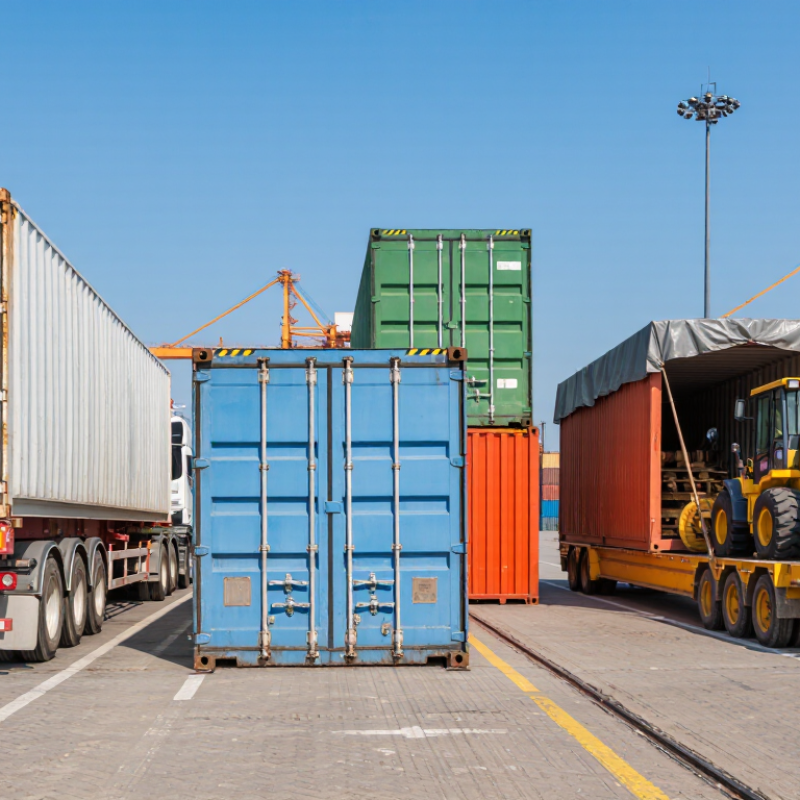
Steel containers are the quiet infrastructure of global trade. Most are built from weather-resistant steel, with reinforced corner castings, locking bars, and wooden or composite floors. Standard dry containers suit cartons, machinery, and packaged goods. High-cube units provide about 30 centimeters of extra height, which helps with bulky cargo.
Open-top and flat-rack containers support oversized equipment, but they require careful securing and route planning.
UNCTAD’s Review of Maritime Transport 2024 reported 12.3 billion tons of seaborne trade in 2023. That volume depends on containers that can withstand repeated lifting, salt air, vibration, and temperature changes.
ISO 668 defines key container dimensions, while the Convention for Safe Containers supports inspection and safe handling. The World Bank’s Logistics Performance Index 2023 also highlights reliability, customs efficiency, and shipment tracking.
A standard box does not guarantee smooth logistics. Corrosion, uneven weight distribution, and damaged floors still create delays. Standardization is useful, but it is not perfection.
Tips: Check the container’s inspection plate before loading. Confirm its external and internal dimensions. Keep heavy cargo low and centered. Use approved lashings for machinery and irregular loads.
Inspect door seals, floorboards, corner posts, and roof panels. A small defect can become expensive at sea.
Buyers should also compare route requirements, loading methods, and local handling equipment. Specifications sometimes look complete, yet practical details remain unclear.
Dry storage containers remain the standard choice for general cargo, machinery, and packaged goods. Their weathering steel panels form a rigid box around a welded floor frame. Vertical corner posts carry stacking loads through reinforced corner castings. Corrugated side sheets add stiffness without making the walls excessively heavy. A double-door arrangement improves loading access, especially when pallets reach the rear.
Small details matter. Door gasket compression, floor condition, and cross-member spacing affect real performance.
Refrigerated steel containers use insulated walls, a sealed floor, and a powered cooling unit. The internal lining protects insulation from impact and moisture. Temperature sensors support controlled transport, but airflow needs clear channels.
Open-top containers replace the rigid roof with a removable cover or tarpaulin. They suit tall cargo loaded by crane, while strong top rails preserve structural stability. Open-top designs are not automatically stronger. Their lifting points and cover system require careful inspection.
Flat-rack containers have fixed or folding end walls, with an open platform between them. They handle oversized machinery when lashing points align with the cargo’s center of gravity.
Tank containers combine a steel pressure vessel with a protective frame and corner castings. Frame geometry shields the vessel during handling and stacking.
Buyers should request drawings, tested payload data, coating details, and inspection records. Dimensions and payloads must match applicable handling standards. Specifications can look complete yet hide weak welds or poor drainage. Field inspections remain valuable.
Choosing a steel container starts with cargo dimensions, not the lowest quotation. A 20-foot dry container suits dense cargo with moderate volume. A 40-foot high-cube model adds about 9 cubic meters of usable space. It fits bulky cartons, furniture, and lightweight machinery better. Measure the cargo after packaging. Small errors become expensive.
Cargo shape can change the answer. Open-top containers handle tall loads and crane loading. Flat racks suit oversized machinery, pipes, or units needing side access. Check lashing points, floor strength, and approved over-height procedures. Temperature-sensitive goods need refrigerated equipment, while moisture-sensitive cargo may require a dry container with verified seals. Inspect door gaskets, corner posts, flooring, and ventilation before booking. A clean exterior is not enough.
UNCTAD’s Review of Maritime Transport 2024 projected containerized trade growth of 3.5% in 2024, increasing pressure on equipment availability and repositioning. The World Shipping Council’s 2024 safety update recorded 221 containers lost at sea during 2023. These figures support careful equipment checks and realistic securing plans. Confirm maximum gross mass, internal dimensions, tare weight, and inspection status with the supplier. Regulations and port limits can differ. A specification sheet can still mislead. Recheck the cargo plan.
For global buyers, steel containers must meet recognized dimensional and strength standards before customization begins. ISO 668 helps define external dimensions, while ISO 1496 covers testing for lifting, stacking, and structural performance. Buyers should request valid inspection records, material details, and load ratings. A clean appearance is not proof of safety. Hidden corrosion may exist beneath fresh paint.
Safety depends on more than the container shell. Doors should close evenly, locking bars should operate smoothly, and corner castings should show no serious deformation. Ventilation openings can reduce condensation, especially during long ocean journeys. Flooring, coatings, and welding materials should match the planned environment. Food-related or sensitive applications may require additional hygiene controls and documented surface treatments. Local transport and workplace rules can also be stricter than international standards.
Customization may include side doors, internal partitions, reinforced floors, ventilation systems, insulation, or specialized access points. Every modification should preserve load paths and avoid weakening the frame. This is where some projects become too optimistic. A requested feature may fit on a drawing but fail during repeated handling. Experienced suppliers should provide revised drawings, weight changes, test plans, and maintenance guidance. Buyers should also confirm weather resistance, paint performance, and spare-part availability before production. Small details matter. A container used in humid ports, cold warehouses, or dusty construction areas needs different protection. The safest specification is practical, documented, and open to review.
| Container Type | Typical International Sizes | Primary Applications | Typical Construction and Features | Key Global Standards | Main Safety Requirements | Common Customization Options | Selection Considerations |
|---|---|---|---|---|---|---|---|
| General-Purpose Dry Container |
20 ft, 40 ft, and 40 ft High Cube Typical external dimensions: 6.06 m, 12.19 m, and 12.19 m length |
Packaged goods, machinery, furniture, consumer products, spare parts, and palletized cargo. | Weather-resistant steel body, corrugated side and end panels, steel doors, marine plywood or equivalent flooring, and corner castings for lifting and stacking. | ISO 668 for dimensions and classifications; ISO 1161 for corner fittings; ISO 1496-1 for freight-container specifications; CSC Convention for international transport. | Cargo must be evenly distributed and secured. Door locking bars, hinges, seals, floor condition, corner castings, and structural panels should be inspected before loading. | Internal lining, ventilation openings, locking-bar protection, additional lashing points, anti-condensation treatment, special flooring, access doors, and color coating. | High availability and broad intermodal compatibility. High Cube models provide additional internal height but may have route or terminal clearance limitations. |
| High Cube Container | 40 ft High Cube and 45 ft High Cube are widely used where accepted by the route and equipment network. | Voluminous but relatively light cargo, retail fixtures, textiles, furniture, insulation materials, and large packaged equipment. | Similar to a dry container but approximately 300 mm taller than a standard-height container. The additional internal volume improves cubic utilization. | ISO 668; ISO 1161; ISO 1496-1; CSC Convention. The 45 ft format may require route-specific acceptance because not every terminal or chassis system supports it. | Verify total gross mass, axle loads, bridge restrictions, stacking limits, and door clearance. Cargo must not exceed the permitted payload or create an unstable center of gravity. | Wide-opening doors, side access, partition walls, garment rails, ventilation, insulation, internal tie-downs, and modified door thresholds. | Best for maximizing volume rather than payload. Confirm compatibility with vessels, rail networks, chassis, inland terminals, and storage locations. |
| Open-Top Container | Commonly 20 ft and 40 ft. The removable roof may be a tarpaulin or a detachable steel cover, depending on design. | Machinery, timber, scrap metal, stone, glass, and cargo that is too tall or difficult to load through standard doors. | Steel container body with an openable roof, reinforced top rails, removable roof bows where applicable, and standard corner castings. | ISO 668; ISO 1161; ISO 1496-1; CSC Convention. Additional cargo-securing practices should follow the carrier and terminal requirements. | Cargo must be secured against vertical and longitudinal movement. Height, lifting method, tarpaulin condition, roof-bow installation, and lashing-point capacity must be checked. | Steel roof, reinforced door header, additional lashing rings, removable gooseneck tunnel, internal protection, anti-abrasion lining, and custom roof height. | Useful for top loading, but weather protection and over-height transport planning require additional attention. Confirm crane or lifting access at both ends of the route. |
| Flat Rack Container | Commonly 20 ft and 40 ft, with fixed-end or collapsible-end configurations. | Heavy machinery, vehicles, tanks, construction equipment, pipes, steel products, and oversized project cargo. | Heavy-duty steel platform with end walls, reinforced corner posts, strong floor, and rated lashing points. Side walls are generally absent. | ISO 668; ISO 1161; applicable parts of ISO 1496; CSC Convention; carrier-specific project-cargo and lashing requirements. | Cargo must be secured using approved lashing arrangements. Concentrated loads, center of gravity, over-width projections, bending forces, and lifting points require engineering review. | Additional lashing rings, removable posts, reinforced floor, custom end walls, dunnage supports, welded saddles, and project-specific securing frames. | Suitable for out-of-gauge cargo, but it may require special booking, permits, route surveys, over-height planning, and higher handling charges. |
| Platform Container | Typically 20 ft and 40 ft platform units with no fixed side or end walls. | Extremely heavy or oversized machinery, industrial modules, transformers, and project cargo requiring a flat support base. | Reinforced steel platform with corner castings and engineered load-bearing structure. It provides less cargo containment than a flat rack. | ISO 668; ISO 1161; applicable ISO freight-container requirements; CSC Convention; carrier approval for the intended cargo and route. | Detailed load distribution calculations, engineered blocking and bracing, approved lifting plans, lashing analysis, and protection against shifting are essential. | Custom stools, saddles, grillage, lashing points, lifting beams, bolted or welded supports, and removable cargo restraints. | Recommended only when the cargo and transport method have been technically assessed. It is not a general substitute for a standard dry container. |
| Refrigerated Container | Commonly 20 ft, 40 ft, and 40 ft High Cube refrigerated units. | Chilled or frozen food, pharmaceuticals, flowers, chemicals requiring temperature control, and other perishable cargo. | Insulated steel enclosure, insulated floor, refrigeration machinery, T-shaped or equivalent floor design, air circulation path, and temperature-control system. | ISO 668; ISO 1161; ISO 1496-2; CSC Convention; ATP may apply to certain international road and rail transport of perishable food. | Pre-trip inspection, set-point verification, airflow clearance, power-supply compatibility, temperature monitoring, drain and gasket inspection, and correct loading pattern are required. | Remote temperature monitoring, humidity control, controlled-atmosphere equipment, additional sensors, data logging, pharmaceutical qualification, and specialized interior finishes. | Temperature range, cargo respiration, transit duration, power availability, maintenance support, and emergency procedures should be confirmed before purchase or lease. |
| Tank Container | Commonly based on a 20 ft ISO frame. Tank capacity varies by product density, design pressure, and applicable regulations. | Liquids, liquefied gases, powders, food ingredients, chemicals, and hazardous materials when the tank design is approved for the product. | Stainless-steel or other approved pressure vessel mounted within a steel intermodal frame, with valves, manways, safety devices, and protective fittings. | ISO 668 and ISO 1161 for the intermodal frame; ISO 1496-3 for tank containers; CSC Convention; applicable UN Model Regulations and national dangerous-goods rules. | Product compatibility, pressure and temperature limits, inspection certificates, valve protection, grounding where required, filling limits, leak testing, and emergency information are critical. | Insulation, heating systems, steam or electric heating, baffled or non-baffled design, special linings, food-grade finish, pressure ratings, and bottom-discharge arrangements. | The cargo classification and regulatory approval determine the correct tank specification. A tank designed for one product may not be suitable for another. |
| Ventilated Container | Generally available in 20 ft and 40 ft formats, subject to equipment-network availability. | Coffee, cocoa, onions, potatoes, timber, and other cargoes that may require passive air exchange. | Steel container with designed ventilation openings or airflow channels that reduce condensation and allow controlled natural ventilation. | ISO 668; ISO 1161; ISO 1496-1; CSC Convention. Cargo-specific ventilation guidance should also be followed. | Vent openings must remain unobstructed. Cargo should be dry and packed to allow airflow; water ingress, condensation, and incompatible commodities must be controlled. | Additional vents, insect screens, adjustable vents, moisture absorbers, internal lining, airflow dividers, and data loggers. | Ventilation does not provide active temperature control. It should not be used as a replacement for refrigeration when a defined temperature range is required. |
| Bulk Container | Often available in 20 ft configurations, with dry-bulk equipment designed for specific free-flowing commodities. | Dry powders and granulated products such as agricultural materials, minerals, and industrial compounds. | Steel container structure with loading hatches, discharge outlets, liners or internal systems, and arrangements intended for bulk handling. | ISO 668; ISO 1161; applicable ISO 1496 requirements; CSC Convention; food, chemical, and dangerous-goods rules where relevant. | Verify product flowability, dust control, pressure limits, outlet closure, cleaning procedures, static-control measures, and compatibility of the liner or vessel. | Food-grade interior, disposable liners, pneumatic discharge, multiple outlets, grounding provisions, dust filters, access platforms, and special coatings. | Product moisture, particle size, bulk density, cleanability, discharge equipment, and local handling infrastructure strongly affect suitability. |
| Offshore and Special-Purpose Container | Dimensions may be based on ISO freight-container formats or offshore service specifications; size and lifting points are project-specific. | Offshore energy, marine construction, remote-site logistics, tools, equipment, waste, and harsh-environment operations. | Reinforced steel enclosure or basket with certified lifting sets, doors, drainage, anti-slip surfaces, and enhanced corrosion protection. | Relevant ISO container requirements; CSC where used in international intermodal transport; offshore standards such as DNV 2.7-1 or EN 12079 may apply depending on the project. | Certified lifting points, proof-load testing, inspection intervals, safe working load marking, door retention, drainage, and corrosion control are required. | Forklift pockets, lifting frames, shelving, tool storage, ventilation, fire-rated construction, spill containment, anti-slip flooring, and offshore coatings. | The operating environment and lifting method define the specification. Certification must be accepted by the relevant offshore operator or authority. |
| Modified or Modular Steel Container | Usually built around 10 ft, 20 ft, or 40 ft modules, although custom dimensions are possible for non-intermodal use. | Site offices, workshops, laboratories, electrical rooms, kiosks, storage rooms, retail units, and temporary facilities. | Steel structural shell modified with personnel doors, windows, insulation, electrical systems, internal partitions, and service penetrations. | ISO and CSC requirements apply when the unit is intended for international intermodal transport. Local building, electrical, fire, and occupational-safety codes apply to occupied modules. | Structural modifications must not compromise corner posts, top rails, floor strength, or lifting points. Electrical grounding, fire safety, ventilation, and emergency egress must be assessed. | HVAC, insulation, fire-rated panels, windows, access control, lighting, plumbing, solar systems, shelving, acoustic treatment, and interior finishes. | Clarify whether the unit is for cargo transport, temporary use, or permanent installation because the applicable regulations can differ significantly. |
In 2026, global buyers are comparing more than standard dry steel containers. Open-top units, insulated models, and modular storage boxes suit different cargo and site conditions. The best choice depends on loading access, temperature exposure, stacking plans, and service life. A cheaper container may fail when doors, floors, or corner posts face repeated use. Measure the complete cost, not only the invoice. Look beyond price.
Sustainability now affects purchasing decisions. Steel can support reuse, repair, and recycling when the design allows practical maintenance. Ask for steel content, coating specifications, expected service life, and end-of-life handling information. Suppliers may provide carbon estimates, but calculation methods differ. That gap matters. A durable floor or replaceable seal can prevent early disposal, although these details are easy to overlook during price negotiations.
Supplier evaluation needs evidence. Request drawings, dimensional tolerances, material details, inspection records, and realistic production schedules. Check weld consistency, door alignment, floor strength, drainage, and protective coatings. A polished catalog is not proof. References help, but they can be selective. I once treated delivery speed as a quality signal; it was not. A stronger review compares sample units, factory communication, warranty terms, spare-part access, and responses to technical questions. Small inconsistencies often reveal larger control problems.
It protects cartons, machinery, pallets, and packaged goods during transport. Standard dry units suit most general cargo.
Choose one when cargo needs extra vertical space. It provides roughly 30 centimeters more height than a standard unit.
Open-top and flat-rack containers can handle tall or wide equipment. Use approved lashings and plan the route carefully. Oversized cargo is rarely simple.
Check the inspection plate, door seals, floorboards, corner posts, and roof panels. Look for corrosion, bent fittings, damaged welds, and poor drainage. Small defects become costly quickly.
Keep heavy items low and near the container’s centerline. Spread the weight across the floor and avoid concentrated pressure. A rough loading plan can fail.
Look for insulated walls, sealed floors, working cooling equipment, and accurate temperature sensors. Keep airflow channels clear around the cargo. Cold air needs space.
Include transport, handling, repairs, seals, flooring, maintenance, and expected service life. A lower invoice may hide weak doors or poor corner posts. Cheap is not always economical.
Request drawings, payload data, material details, inspection records, tolerances, and production schedules. Check sample units for weld consistency, door alignment, coating quality, and drainage. A polished catalog proves little.
Prefer designs that support repair, reuse, replaceable seals, and recycling. Ask about steel content, coating life, and end-of-life handling. Carbon estimates may use different methods.
This guide explains why Steel Containers remain essential to global trade in 2026, providing durable, secure, and reusable solutions for transporting goods across different modes of transportation. It introduces major container types, including standard dry units, high-cube models, open-top designs, flat racks, refrigerated containers, and specialized tank containers, while highlighting their structural features, load capacities, ventilation, insulation, and handling requirements.
The article also offers practical advice for matching container specifications to cargo characteristics, shipping routes, and operational conditions. It reviews international standards, safety expectations, inspection considerations, and customization options such as internal linings, doors, partitions, and temperature-control systems. Finally, it examines key buying factors for global purchasers, including total cost, durability, maintenance, sustainability, recyclability, supplier reliability, production quality, certifications, delivery capability, and after-sales support. Together, these insights help buyers make informed, compliant, and cost-effective container decisions.
Guichang Metal Racks